「释义」
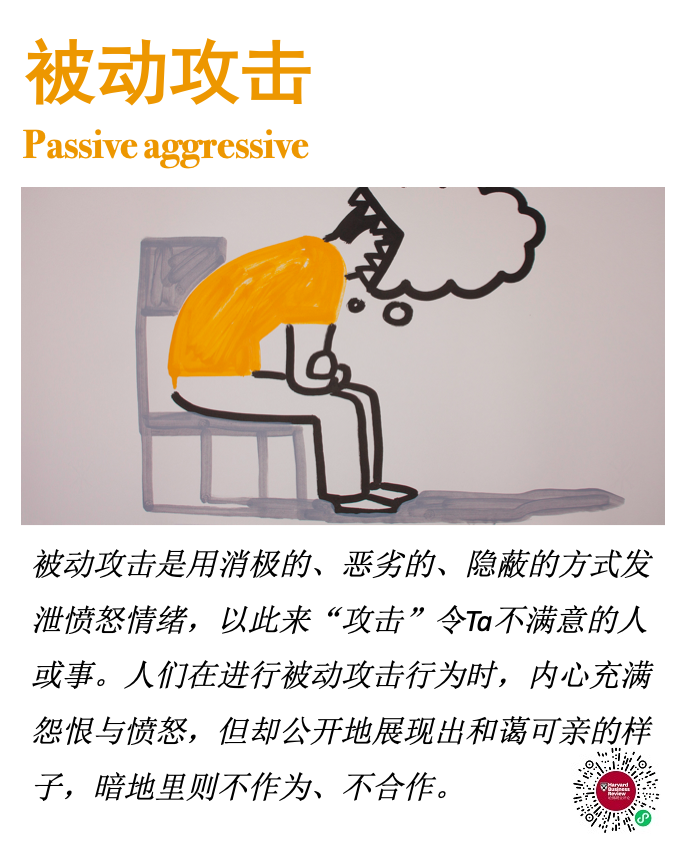
被动攻击是用消极的、恶劣的、隐蔽的方式发泄愤怒情绪,以此来“攻击”令Ta不满意的人或事。人们在进行被动攻击行为时,内心充满怨恨与愤怒,但却公开地展现出和蔼可亲的样子,暗地里则不作为、不合作。
「应用场景」
提到工作上的冲突,你可能就会想到谁是罪魁祸首:无能的上司、被动攻击的同事,或是私藏资源的另一个部门同事。我们花太多时间抱怨这些人,回避他们,或是和他们对抗。但如果你希望管理职场的冲突,就不能从别人开始。通常不会只有一个罪魁祸首,如果你希望不要那么常出现对抗,而且工作场所较有乐趣和生产力,就必须了解自己在冲突中的角色,以及自己能做些什么,以打破始于挫折与压力、终于职场战争的恶性循环。
Bring to mind a conflict at work, and you’ll probably have the perpetrator in mind: your incompetent boss, that passive-aggressive colleague, or the resource-hoarding peer in another department. We spend an inordinate amount of time complaining about these people, avoiding them, and fighting with them. But if you want to manage conflict in the workplace, you can’t start with someone else. Usually there isn’t just one culprit, and if you want less fighting and a more enjoyable, productive workplace, you have to understand your own role in it and what you can do to break a vicious cycle that starts with frustration and stress and ends with workplace wars.
以上文字选自
A 3-Step Process to Break a Cycle of Frustration, Stress, and Fighting at Work Annie McKee | 文 马冰仑 丨编辑