「释义」
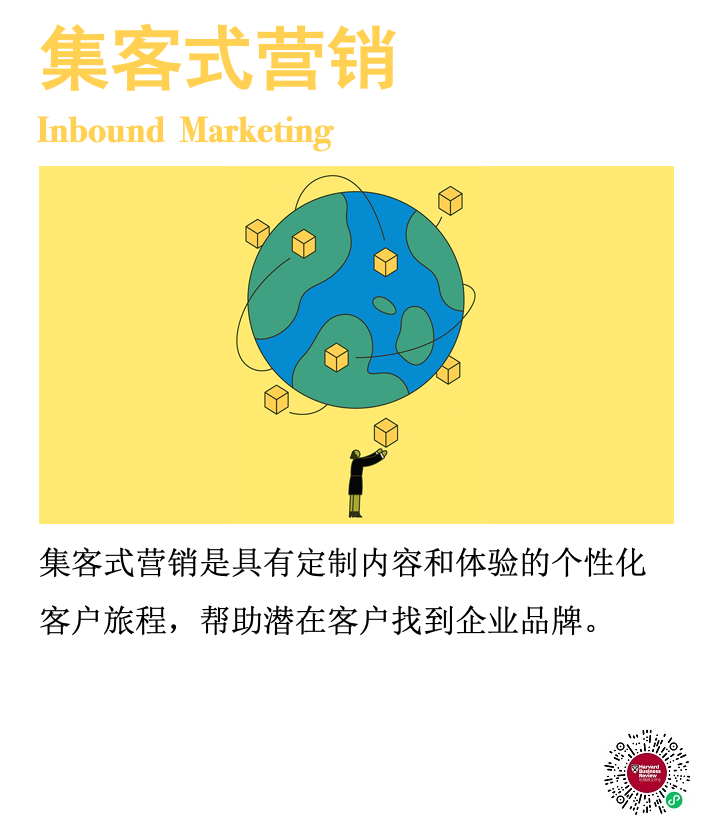
集客式营销是具有定制内容和体验的个性化客户旅程,帮助潜在客户找到企业品牌。
Inbound marketing is a personalized customer journey with customized content and experience to help potential customers find a corporate brand.
「应用场景」
需求中心通过集客式营销(比如,具有定制内容和体验的个性化客户旅程)和推播式营销(比如,通过付费的媒体、活动、网络研讨会和电子邮件来寻找客户)来发现商机。需求中心会优先考虑和鉴定潜在客户,并协调客户推广。有时候,回应是数字式的(比如,需求中心会生成包含个性化内容的电子邮件)。其他时候,需求中心会提供指导和内容,帮助内部或现场销售人员跟进。数字工具和人会共同做出改变,以在购买周期的恰当时候与客户建立联系。
Demand centers identify business opportunities through inbound marketing (e.g., personalized customer journeys with tailored content and experiences) and outbound marketing (e.g., paid media, events, webinars, and emails to find customers). Demand centers prioritize and qualify leads and orchestrate customer outreach. Sometimes, the response is digital (e.g., the demand center generates an email with personalized content). Other times, the demand center provides guidance and content to help an inside or field salesperson follow up. Together, digital tools and humans adapt to connect with customers at the right moment in their buying cycle.
销售和营销团队的工作方式被重新定义。年度和季度销售计划制定之后继之以日常执行的旧节奏让位于新的节奏。需求中心分析会指导销售活动,根据客户需求不断调整优先考虑的工作。营销人员也必须改变他们的行为。他们不再重点关注针对细分客户和产品的推播宣传活动。相反,营销人员会确定决策者的类型,创建内容,开发算法,并决定使用哪些渠道用于推播式和集客式客户接洽。
the way that sales and marketing teams work is redefined. The old cadence of annual and quarterly sales planning followed by daily execution, gives way to a new rhythm. Demand center analytics guide sales activity, continuously reprioritizing work based on customer needs. Marketers too must change what they do. They no longer focus on outbound campaigns for customer segments and products. Instead, marketers identify types of decision makers, create content, develop algorithms, and decide which channels to use for outbound and inbound customer engagement.
本文节选自《哈佛商业评论》中文版2021年11月刊 《B2B客户期望空前,需求中心可以助力》
安德里斯·佐尔特纳斯(Andris A. Zoltners)、PK·辛哈(PK Sinha)、萨莉·洛里默(Sally E. Lorimer)、阿伦·夏斯特里(Arun Shastri) | 文 徐新玉 丨编辑